More Warehouse Applicants Won't Fix Your Hiring Problem

When a warehouse role will not fill, the instinct is to turn up the volume.
Post to more boards, widen the radius, lift the budget, get more applicants in the door. It feels like progress, because the applicant count climbs.
But the count was never the problem. You can triple your applicants and fill the role no faster, because most of the people you added were never able to take it.
Why more applicants is the wrong fix
More applicants only helps if the thing holding you back is a shortage of them. In warehouse hiring, it rarely is.
The pile is already big. The problem is what is in it.
A bigger stack of the wrong people does not get you to a hire any quicker.
It just gives your team more to sort through before they reach the few who fit. You have added work, not progress.
Fit is the real bottleneck
What actually decides whether a warehouse role fills is how many applicants can genuinely do it.
That comes down to a short list of hard requirements.
Can they get to the site for the shift, are they free for the hours, do they hold the licence or certificate the role needs, and do they actually want the job.
Miss any one of those and the application is a dead end, however many of them you collect.
Ten people who clear all four are worth more than two hundred who do not.
What unqualified volume costs you
Volume that does not fit is not free. Every unsuitable application is something a person on your team has to open, read, and rule out.
At warehouse hiring scale, that is hours a week spent reaching no.
It also slows everything down. While your recruiters work through a pile padded with people who cannot take the role, the clock on the vacancy keeps running, and the cost of the open seat keeps climbing.
How your good candidates get buried
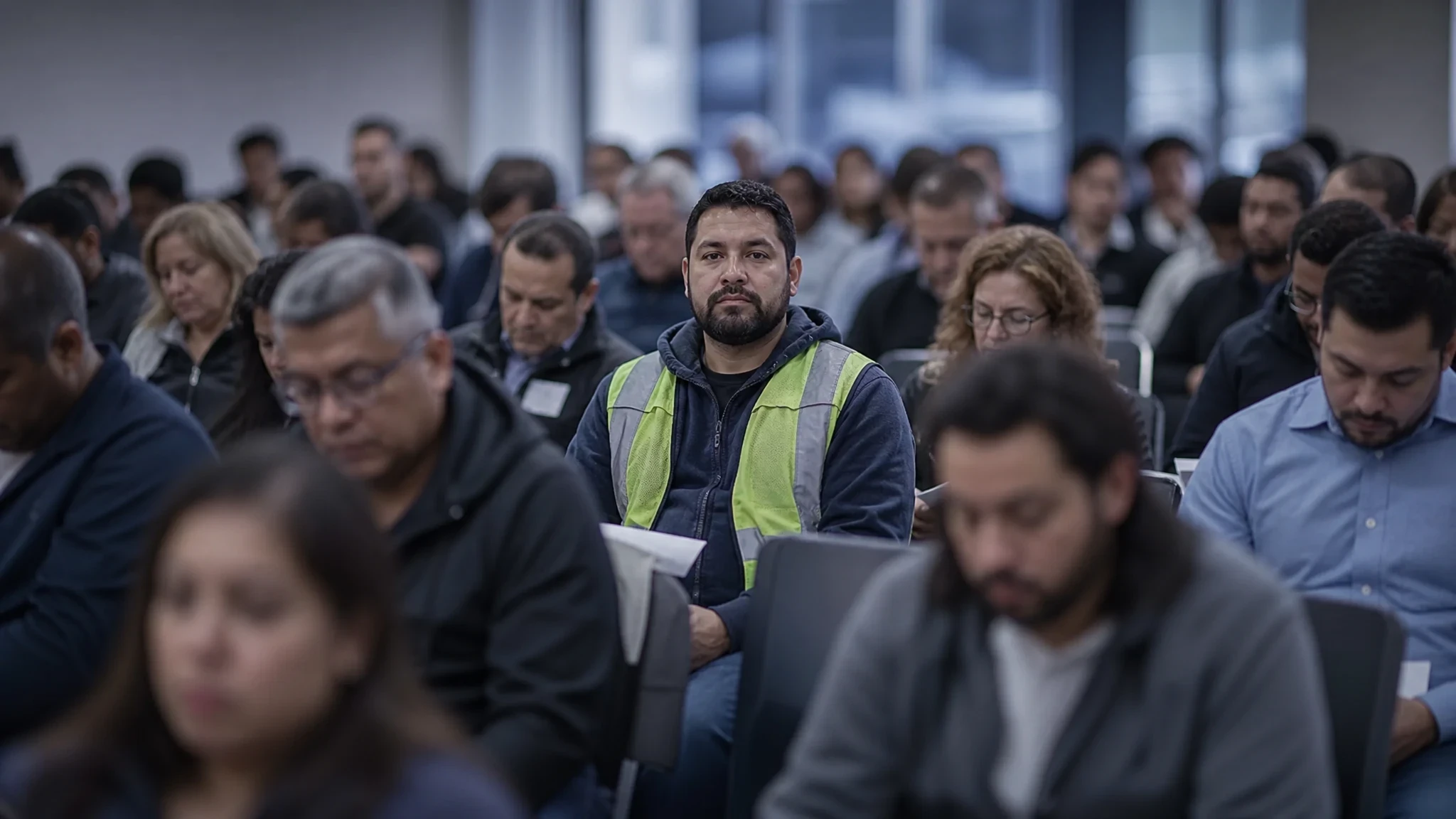
There is a worse cost than wasted time. The handful of people who are a strong fit are sitting in that same pile, and they do not wait around.
A qualified warehouse candidate is usually applying to several roles at once. If yours takes days to surface them because your team is wading through hundreds of unsuitable applications first, they have already started somewhere else. The people you actually wanted get buried, and by the time you dig them out they are gone.
Turning volume into qualified volume
The fix is to put a filter on the reach, so the volume arrives already sorted for fit. You keep the wide net. You just stop landing everything in it on your recruiter's desk.
When you screen for the essentials at the point someone shows interest, their availability, location, licence, and shift, the applicants who cannot do the role drop out before they reach you. What is left is smaller and far more useful.
That is the shift that actually fills warehouse roles. A steadier flow of people who fit, reaching you while they are still available, instead of a flood you cannot work through in time.
Filtering for fit early is the difference between a busy pipeline and a productive one. It is where Wonderkind's qualification focuses, keeping your warehouse volume high while making sure the people who reach you can actually do the job.
Worth a look against a role that keeps filling up with the wrong applicants.
Related articles
Never miss a post
Ready to write your own results?
Tell us what you need to hire and we'll show you what Wonderkind can do for your roles.
No credit card required